
 English
 Español
 Deutsch
 한국어
한국어


Choosing the right material is one of the most important decisions when developing Cosmetic Packaging. For skincare brands, the comparison between a PP Airless Bottle and an AS airless bottle often comes down to appearance, durability, formula compatibility, weight, customization, and production requirements. Both packaging options can provide effective airless dispensing, but their material characteristics are different.
A PP airless bottle is mainly made from polypropylene, commonly known as PP. An AS airless bottle is generally made from acrylonitrile styrene, a transparent or highly clear plastic material used for cosmetic packaging. Although both can be developed as Airless Packaging, the final bottle can look and perform differently depending on the selected material, structure, Pump, formula, and manufacturing process.
This guide explains the PP airless bottle vs AS airless bottle comparison in practical terms. It covers material characteristics, appearance, strength, chemical compatibility, weight, customization, production, applications, and selection considerations. Understanding these differences can help Cosmetic Brands choose packaging that matches the actual product instead of choosing only according to appearance or price.
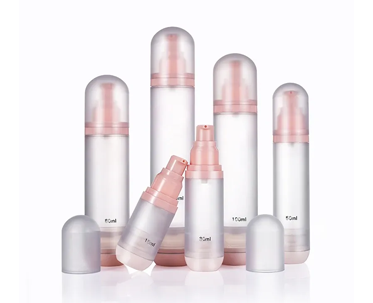
What Is a PP Airless Bottle?
A PP airless bottle is an airless cosmetic container manufactured primarily with polypropylene. PP is widely used in packaging because it combines relatively low weight, good chemical resistance, practical processing characteristics, and suitable durability. A PP airless bottle can be designed with a pump system, internal piston, product chamber, actuator, and protective outer structure.
The airless mechanism allows the skincare formula to move toward the dispensing outlet as the product is used. In many designs, an internal piston rises gradually after each pump stroke. This structure helps reduce the need for a traditional dip tube and can limit direct air exposure to the product.
PP is suitable for many cosmetic packaging applications because it can be processed into different shapes and wall structures. A PP airless bottle may be produced in small, medium, or larger capacities and can be customized with different colors, surface treatments, pump heads, and decorative details.
What Is an AS Airless Bottle?
An AS airless bottle uses acrylonitrile styrene as a primary material for the bottle structure. AS is known for its relatively high clarity and attractive surface appearance. This makes an AS airless bottle suitable for brands that want packaging with a clean, transparent, bright, or premium visual effect.
Like a PP airless bottle, an AS airless bottle can incorporate an internal dispensing mechanism that moves the formula toward the pump. The outer appearance can be customized through colors, printing, frosting, coating, or other decorative processes.
The main reason brands compare an AS airless bottle with a PP airless bottle is that material choice can change the appearance and physical characteristics of the final package. AS may offer a different visual effect, while PP provides different advantages in terms of flexibility, chemical resistance, and overall packaging performance.
PP Airless Bottle vs AS Airless Bottle: Basic Material Difference
The most fundamental difference in a PP airless bottle vs AS airless bottle comparison is the material itself. PP belongs to the polyolefin family and is widely used for containers, closures, cosmetic packaging, and industrial components. AS is a styrene-based plastic known for rigidity, dimensional stability, and clarity.
A PP airless bottle generally has a more practical and flexible material profile. PP can be produced in a wide range of colors and is suitable for many chemical environments. An AS airless bottle is often selected when visual clarity, surface appearance, and rigidity are important considerations.
Neither material is automatically better for every skincare product. The correct choice depends on the formula, bottle design, pump structure, target appearance, production process, and required performance.
| Feature | PP Airless Bottle | AS Airless Bottle |
|---|---|---|
| Main Material | Polypropylene | Acrylonitrile Styrene |
| Typical Appearance | Opaque or customized colors | Clear, bright, translucent, or customized |
| Weight | Generally lightweight | Depends on wall thickness and design |
| Rigidity | Good balance of strength and flexibility | Generally rigid |
| Chemical Resistance | Good for many cosmetic formulas | Requires formula-specific compatibility testing |
| Visual Effect | Excellent for solid colors and customized finishes | Strong choice for clear and premium visual effects |
| Typical Applications | Skincare, creams, lotions, serums, personal care | Skincare and beauty products where appearance is important |
PP Airless Bottle vs AS Airless Bottle: Appearance
Appearance is one of the most noticeable differences between a PP airless bottle and an AS airless bottle. PP is commonly used for opaque or solid-color packaging. It can be molded in white, black, natural, pastel, or customized colors. This makes a PP airless bottle suitable for minimalist, clean, colorful, or highly customized skincare designs.
AS is often associated with a clear and glossy appearance. An AS airless bottle can provide a bright surface and may be suitable for products where the visual effect of the container is part of the brand presentation. Clear or translucent packaging can create a different impression from an opaque PP package.
However, material alone does not determine the final appearance. A PP airless bottle can receive frosting, printing, coating, hot stamping, electroplating, or other finishes. An AS airless bottle can also be colored or decorated. Brands should therefore evaluate finished samples rather than judging the material only from its basic appearance.
PP Airless Bottle vs AS Airless Bottle: Durability
Both PP and AS can be used to produce durable cosmetic packaging, but their physical behavior is different. A PP airless bottle generally offers a useful balance between toughness and flexibility. This can be helpful for packaging that needs to withstand normal handling, transportation, and repeated daily use.
An AS airless bottle is generally more rigid and can provide a firm, structured feel. This rigid character can contribute to a premium hand feel and stable appearance. However, the actual impact performance depends on bottle shape, wall thickness, mold design, material grade, and production conditions.
For either a PP airless bottle or an AS airless bottle, drop testing and transportation testing should be completed before mass production. A beautiful bottle that cracks or deforms during transportation is not a successful packaging solution. Practical testing is more useful than judging durability from material names alone.
PP Airless Bottle vs AS Airless Bottle: Formula Compatibility
Formula compatibility is one of the most important parts of the PP airless bottle vs AS airless bottle comparison. Skincare Products may contain water, oils, alcohol, fragrances, botanical extracts, acids, active ingredients, silicones, or other components. These ingredients can interact differently with packaging materials and internal components.
PP has good resistance to many chemicals and is commonly used in cosmetic and personal care packaging. This makes a PP airless bottle a practical option for many skincare formulas. However, good general resistance does not mean every formula is automatically compatible.
An AS airless bottle may also work well with many Cosmetic Products, but formula-specific testing remains important. Brands should evaluate the actual product against the bottle, pump, gasket, piston, and other internal components.
Compatibility testing can check for discoloration, swelling, cracking, deformation, odor transfer, leakage, changes in formula appearance, and changes in pump performance. Testing should be conducted under realistic storage conditions whenever possible.
PP Airless Bottle vs AS Airless Bottle: Weight
Packaging weight affects material cost, shipping cost, handling, and the perceived value of a skincare product. A PP airless bottle can be designed as a lightweight package because PP has a relatively low density. Lightweight packaging can be useful for brands that need to control transportation weight or develop convenient travel products.
An AS airless bottle may feel more rigid depending on its structure and wall thickness. The actual weight can vary significantly between designs. A thick AS bottle may weigh more than a lightweight PP design, but an optimized AS structure can also be developed to control material consumption.
Brands should compare complete packaging assemblies rather than comparing material density alone. The pump, actuator, piston, inner container, outer shell, decoration, and closure all contribute to final package weight.
PP Airless Bottle vs AS Airless Bottle: Pump Performance
The airless mechanism is important regardless of whether the outer package uses PP or AS. The pump should deliver a stable amount of product with each press. It should return smoothly, maintain good sealing, and continue dispensing as the formula level decreases.
A PP airless bottle and an AS airless bottle can both use different pump structures depending on the formula and desired dosage. Thick creams may require a different pump configuration from lightweight serums or lotions.
Brands should test pump performance using the actual formula. Empty-container testing is useful for initial inspection, but it cannot completely represent real product performance. Formula viscosity, temperature, filling method, and storage conditions can all affect dispensing.
PP Airless Bottle vs AS Airless Bottle: Customization
Customization is important for cosmetic brands because packaging must communicate product positioning. A PP airless bottle offers many options for solid colors, molded effects, printing, and surface decoration. PP is particularly useful when the brand wants a specific opaque color or soft-touch appearance.
An AS airless bottle can also be customized with colors and decorative treatments. Its natural clarity may provide additional visual possibilities for transparent or translucent packaging designs. Frosting, printing, hot stamping, coating, and other processes can be used depending on the package structure.
Before selecting a PP airless bottle or AS airless bottle, brands should request physical samples. Color and surface effects can look different on a computer screen compared with the finished molded package. Sample approval is therefore an important part of cosmetic packaging development.
PP Airless Bottle vs AS Airless Bottle: Manufacturing Considerations
Manufacturing requirements also affect the PP airless bottle vs AS airless bottle decision. Injection molding conditions, mold design, cooling, wall thickness, shrinkage, and assembly tolerances must be considered during development.
A PP airless bottle requires suitable processing conditions to achieve stable dimensions and surface quality. The manufacturer must control molding parameters carefully, especially when the bottle includes thin walls, complex curves, threaded areas, or precise pump connections.
An AS airless bottle also requires accurate mold development and injection molding control. Because appearance is often an important reason for choosing AS, surface defects, flow marks, scratches, bubbles, and dimensional variation should be carefully inspected.
For both materials, the manufacturer should evaluate the entire package rather than only the bottle body. Pump assembly, piston movement, sealing, decoration, and final packing all influence the finished product.
Which Products Are Suitable for a PP Airless Bottle?
A PP airless bottle can be used for many skincare and personal care products. Common applications include facial creams, moisturizers, serums, lotions, eye creams, hand creams, body care products, and treatment formulas.
A PP airless bottle can be especially useful when the brand wants a lightweight package with a solid-color appearance. It can also be suitable for brands that require extensive color matching and surface customization.
However, product suitability should always be confirmed through formula compatibility and dispensing tests. A product’s viscosity, ingredients, storage conditions, and intended shelf life should all be considered before finalizing the package.
Which Products Are Suitable for an AS Airless Bottle?
An AS airless bottle can be a strong choice for skincare and beauty products where a rigid structure and attractive surface are important. Facial serums, moisturizers, creams, beauty treatments, and other premium-looking products may use this type of packaging.
The clear or glossy visual effect of an AS airless bottle can support packaging designs that emphasize a clean and modern appearance. However, if the formula is sensitive to light, a transparent package may require additional protection through coloring, coating, secondary packaging, or another suitable design solution.
How to Choose Between PP Airless Bottle and AS Airless Bottle
The best way to choose between a PP airless bottle and an AS airless bottle is to evaluate the entire project. Start with the skincare formula, then consider appearance, capacity, pump dosage, material requirements, decoration, cost, transportation, and customer expectations.
Choose PP When Practicality Is the Priority
A PP airless bottle can be a practical choice when a brand needs lightweight packaging, good chemical resistance, solid-color customization, and reliable daily-use performance. PP is also suitable for brands that want a wide range of colors and decorative possibilities.
Choose AS When Appearance Is a Major Priority
An AS airless bottle may be suitable when the visual effect of the package is particularly important. Its rigid structure and potential for clear or glossy surfaces can support premium cosmetic designs.
Test Both Materials When the Formula Is Sensitive
When a skincare formula contains complex active ingredients or has unusual chemical characteristics, brands should test both materials if necessary. Comparative testing can provide useful information about formula stability, appearance, sealing, dispensing, and long-term compatibility.
Quality Control for PP Airless Bottle and AS Airless Bottle
Quality control should cover every stage of PP airless bottle and AS airless bottle production. Incoming materials should be checked before molding. During injection molding, manufacturers should monitor dimensions, surface quality, weight, and production consistency.
After molding, components should be inspected before assembly. The completed airless bottle should then be tested for pump function, dosage, leakage, sealing, appearance, and assembly accuracy.
For cosmetic packaging, appearance inspection is especially important. Scratches, color variation, printing defects, poor hot stamping, uneven frosting, and other surface problems can affect the final presentation of the skincare product.
Transportation testing is also valuable. Finished PP airless bottle and AS airless bottle products may experience vibration, pressure, temperature changes, and repeated handling during shipment. Proper packaging and inspection can reduce the risk of damage before the products reach customers.
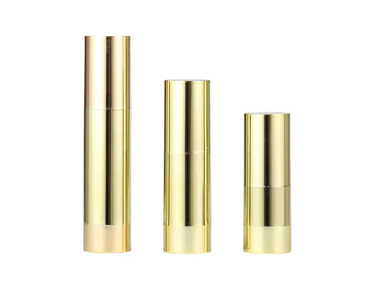
Customization Services for Cosmetic Airless Bottles
Cosmetic brands often need more than a standard PP airless bottle or AS airless bottle. Custom packaging may require a specific capacity, bottle shape, pump dosage, color, decoration, or refill structure.
Yuyao Dingyu Plastic Industry Co., Ltd. provides cosmetic packaging manufacturing services from its factory in Yuyao, Ningbo, Zhejiang, China. The company has its own manufacturing facility, mold development workshops, injection molding machines, and testing equipment.
The company supplies Airless Cosmetic Bottles as well as lotion bottles, perfume bottles, PET bottles, and other beauty packaging. OEM and ODM projects can be developed according to customer drawings or samples.
Available customization services include new mold development, color matching, silk-screen printing, hot stamping, electroplating, frosting, and other surface treatments. Matching pump heads can also be provided so customers can evaluate the complete packaging system before placing a larger production order.
Quality control is carried out throughout production to support stable product dimensions, reliable assembly, consistent decoration, and dependable packaging performance. The company also has self-operated import and export rights and serves customers across North America, South America, Europe, Southeast Asia, the Middle East, Australia, and other markets.
Common Questions About PP Airless Bottle and AS Airless Bottle
Is PP Better Than AS for Cosmetic Packaging?
Neither material is universally better. A PP airless bottle and an AS airless bottle have different characteristics. PP is often selected for its practical chemical resistance, lightweight structure, and color customization, while AS may be selected for rigidity and attractive visual effects.
Can Both Materials Be Used for Skincare?
Yes. Both PP and AS can be used in cosmetic packaging applications. The final choice should be based on formula compatibility, package structure, appearance requirements, pump performance, and testing results.
Which Is Better for Thick Cream?
The material itself is not the only factor. Thick creams require a suitable airless pump and internal product chamber. Both PP airless bottle and AS airless bottle designs can be developed for creams if the complete package is correctly engineered and tested.
Can PP and AS Airless Bottles Be Customized?
Yes. Both PP airless bottle and AS Airless Bottle Packaging can be customized in color, capacity, shape, decoration, and pump configuration. Special designs may require new mold development.
How Should Brands Test the Packaging?
Brands should test the complete package with the actual skincare formula. Useful tests may include compatibility testing, leakage testing, pump dosage testing, repeated dispensing, drop testing, temperature testing, and transportation simulation.
Conclusion: PP Airless Bottle vs AS Airless Bottle
The PP airless bottle vs AS airless bottle comparison is ultimately about selecting the material that best matches the skincare product and brand requirements. A PP airless bottle can provide a practical combination of lightweight construction, chemical resistance, durability, and color customization. An AS airless bottle can provide rigidity, clarity, gloss, and an attractive premium appearance.
Both options can support effective airless dispensing when the pump, piston, product chamber, and bottle structure are correctly matched. The best choice should not be based on material name alone. Formula compatibility, dispensing performance, capacity, appearance, manufacturing process, decoration, transportation, and quality control all need to be considered together.
For cosmetic brands developing new skincare packaging, comparing physical samples of a PP airless bottle and an AS airless bottle is often the most practical approach. Test the actual formula, check the pump dosage, inspect the surface finish, evaluate transportation performance, and confirm the final appearance before mass production.
With appropriate material selection and professional manufacturing support, both PP airless bottle and AS airless Bottle Packaging can provide reliable solutions for modern skincare products. The right packaging should protect the formula, dispense smoothly, look consistent with the brand, and remain dependable throughout the complete product life cycle.
SEO Description: Compare PP airless bottle vs AS airless bottle and understand the key differences in material, appearance, durability, chemical compatibility, weight, customization, pump performance, manufacturing, and skincare applications. Learn how to select the Right Airless Bottle for cosmetic packaging.



 WhatsApp
 Téléphone
 E-mail
 message
Commentaire
(0)